
Library / Identity & look
Look lock (palette / lens / texture)
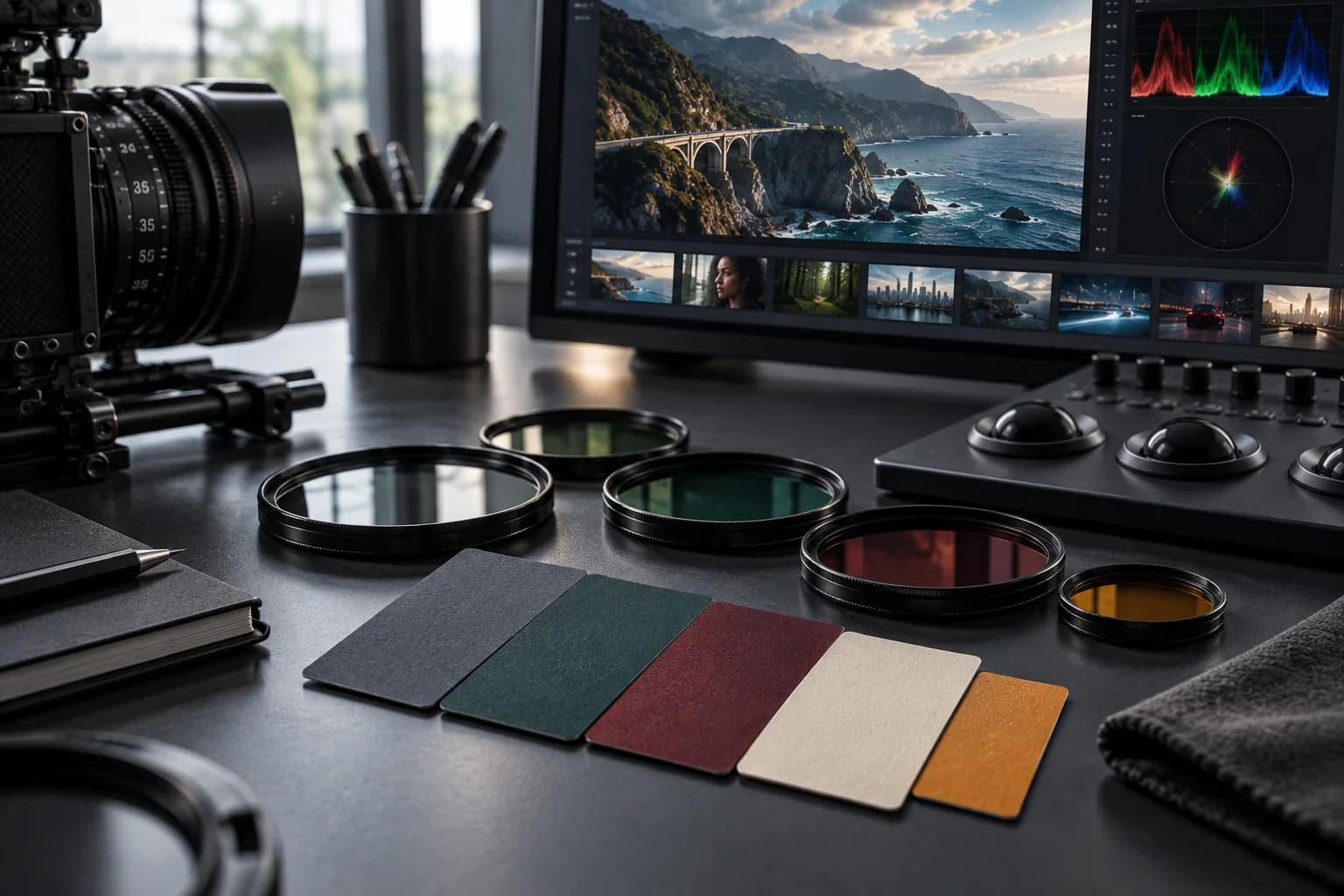

Define a scene-specific visual rulebook for color, lighting, lens intent and texture, with enough precision to judge whether a new frame belongs in the film.
look · palette · lens · lock · grade · bible
Film Lock / Working resource / v1
Make the decision. Keep the record.
Define a scene-specific visual rulebook for color, lighting, lens intent and texture, with enough precision to judge whether a new frame belongs in the film.
Download worksheet (.md) ↓Includes instructions, a worked example and a blank worksheet. Edit in any text or Markdown editor. Save your copy with your project files; it does not sync to the shared demo.
How to use it
- Begin with the emotional job of the scene. Pick a small set of approved references and identify what each contributes; do not ask one image to imply every creative decision.
- Specify the relationship between light sources, subject and background. Treat lens choices as a starting point for framing, not a promise that a focal length alone creates a particular image.
- Test the rules on a wide and a close-up. Record deliberate exceptions with their story reason, then freeze a version for the coverage team.
Review before locking
- The lighting plan describes the set, not just a flattering isolated frame.
- Skin, shadow detail and the signature accent survive both wide and close coverage.
- Exceptions have a story reason and a version; the look is not a uniform color filter.
Fictional worked example
The Last Signal
An original teaching example, not a customer result. Reference filenames are illustrative; no source media is included.
- Visual premise
- The Last Signal: a small human pool of warmth inside a cold relay room, with the valley still visible beyond the glass.
- Palette and exclusions
- Cool charcoal and natural storm blue dominate; cream fabric protects the face from the background; copper is a restrained practical-light accent. No blanket sepia cast, neon magenta or crushed skin tones.
- Lighting geography
- Window on Mara's left supplies soft cool light. A desk practical sits right of the radio and adds a small warm edge. Reverse coverage must preserve this set geography rather than flip the source.
- Framing and lens intent
- Eye-level, restrained frames. Start the room wide around 24mm, action coverage around 35mm and the decision close-up around 50mm; adjust camera distance and format to preserve facial proportions and geography.
- Texture and movement
- Keep fabric weave, worn paint and condensation visible. Controlled contrast, no fake film burns or heavy vintage grain. Locked camera until the decision; a subtle move is allowed only if it clarifies that turn.
- Look approval test
- Compare CS1A wide and CS1C close side by side. Skin remains natural; the window stays cool and the practical warm. Any changed light direction or new color treatment requires look v2 approval.
Preview the blank worksheet
The download includes these prompts plus project, version and approval fields. Duplicate rows when you need more coverage or episodes.
- Visual premise
- Explain the emotional contrast this scene must express in one concrete sentence.
- Palette and exclusions
- Name dominant, supporting and accent colors, and hues or treatments to avoid.
- Lighting geography
- Place the motivated sources relative to the set and subject; identify what must remain consistent.
- Framing and lens intent
- Define perspective, camera height and background separation; note any starting lens choices.
- Texture and movement
- Set the level of surface detail, image treatment and camera movement, including prohibited effects.
- Look approval test
- State the frames to compare, the references to use and what triggers a new version.