
Library / Planning
30-day posting plan
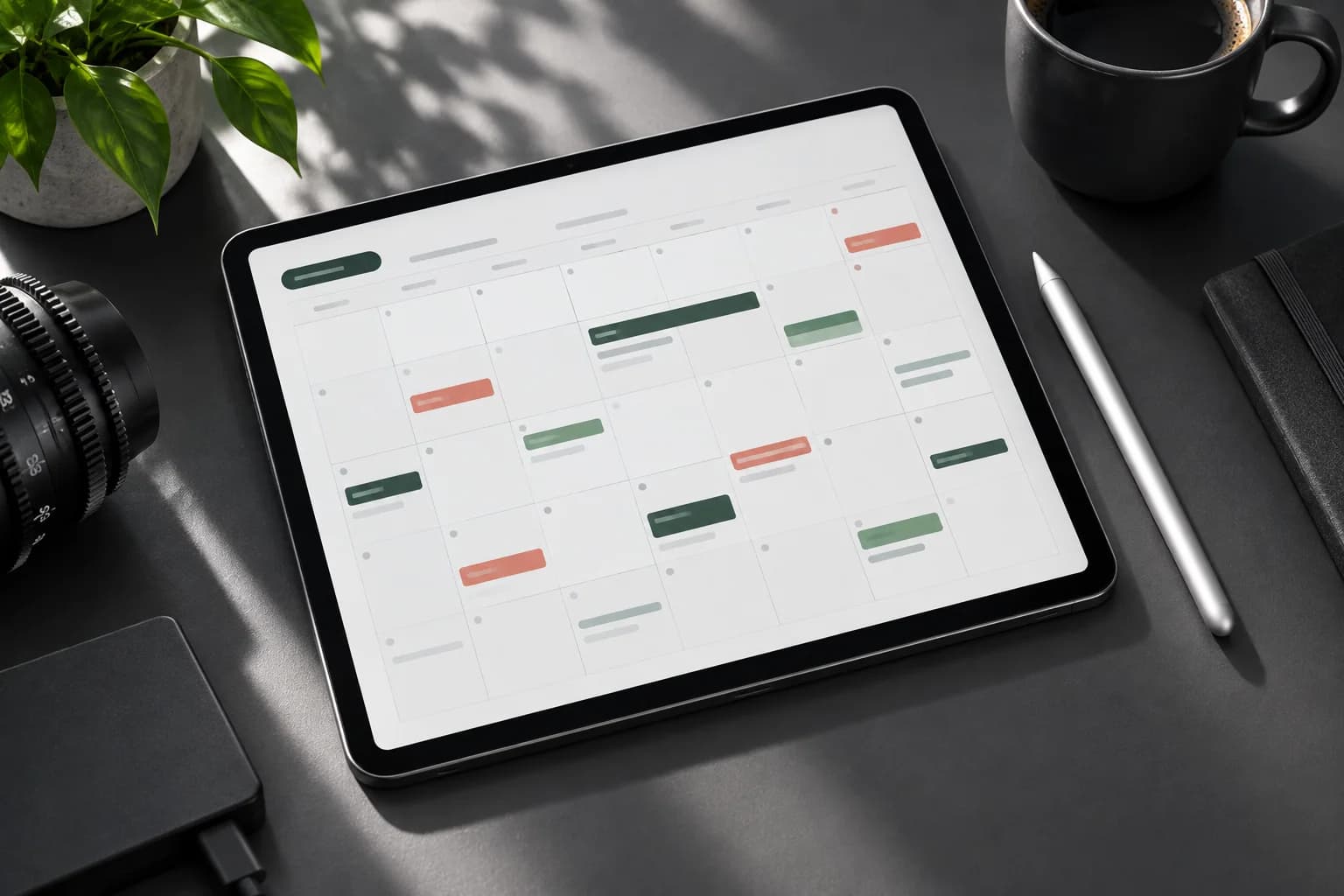

Build a capacity-based release plan with specific episode deliverables, owners and review points, then decide what to change from recorded observations rather than chasing an assumed ideal schedule.
posting · cadence · plan · viral · podcast · calendar
Viral Series / Working resource / v1
Make the decision. Keep the record.
Build a capacity-based release plan with specific episode deliverables, owners and review points, then decide what to change from recorded observations rather than chasing an assumed ideal schedule.
Download worksheet (.md) ↓Includes instructions, a worked example and a blank worksheet. Edit in any text or Markdown editor. Save your copy with your project files; it does not sync to the shared demo.
How to use it
- Start with the time and people you actually have. Reserve time for proof recording, captions and review before choosing a release cadence.
- Create a dated row per episode with an owner, content status, distribution destination and approval checkpoint. A planned slot is not a scheduled or published post.
- Review episodes after a consistent observation window. Record actual source metrics and audience questions, then change one part of the format at a time. Do not invent targets from these examples.
Review before publishing
- Each planned release has an owner and a realistic review slot.
- Blocked proof delays publication; no unsupported claim is used to fill a calendar.
- Observations are sourced and separated from hypotheses; no post is claimed scheduled by this worksheet.
Fictional worked example
One Small Fix
An original teaching example, not a customer result. Reference filenames are illustrative; no source media is included.
- Capacity and cadence
- Fictional pilot assumption: Alex has one recording block and one editing block each week. Plan one episode per week for three weeks, with a spare slot for re-recording. This is a capacity example, not an algorithm rule.
- Episode queue
- Week 1 EP01 lamp position: samples needed. Week 2 EP02 desk clutter: frame design pending. Week 3 EP03 quieter corner: audio samples needed. Nothing is marked publish-ready until the proof is reviewed.
- Production row
- EP01: Monday script review, Tuesday samples, Thursday edit and captions, Friday producer approval. If samples fail, move the release rather than publishing a claim the footage cannot support.
- Release row
- EP01 / destination to be chosen by Alex / date and timezone unresolved / ep01-lamp-v1.mp4 planned / packaging v1 / Alex publishes only after approval. No scheduler is connected.
- Observation log
- At seven days after each pilot release, record available platform analytics and the questions viewers asked. Views, completion and saves: not yet available. Note metric definitions before comparing destinations.
- Next-cycle decision
- Hypothesis: if comments show viewers cannot identify the changed variable, revise comparison labels before trying another hook. No performance conclusion exists until the pilot is published and reviewed.
Preview the blank worksheet
The download includes these prompts plus project, version and approval fields. Duplicate rows when you need more coverage or episodes.
- Capacity and cadence
- Record available production time and the release pace it can realistically support.
- Episode queue
- For each episode, record its promise, proof needed and readiness status.
- Production row
- Add recording date, edit date, caption review, approval owner and fallback if blocked.
- Release row
- Choose destination, actual date/time and timezone, final filename, title/caption version and manual publishing owner.
- Observation log
- Record the source, observation window, relevant metrics and qualitative questions; leave unavailable values blank.
- Next-cycle decision
- Choose keep, revise or stop with evidence and one specific next test.